Revolut says it cut its AI coding bill by about 90% by moving 2,000 engineers off metered Claude and OpenAI APIs and onto open models it runs itself. That is a ten-fold drop, and it is the kind of number that makes a CFO forward an article to the CTO with no comment. Before you do the same, it helps to read what the StartupHub write-up of the talk actually says, and what it leaves out.
What Revolut actually did
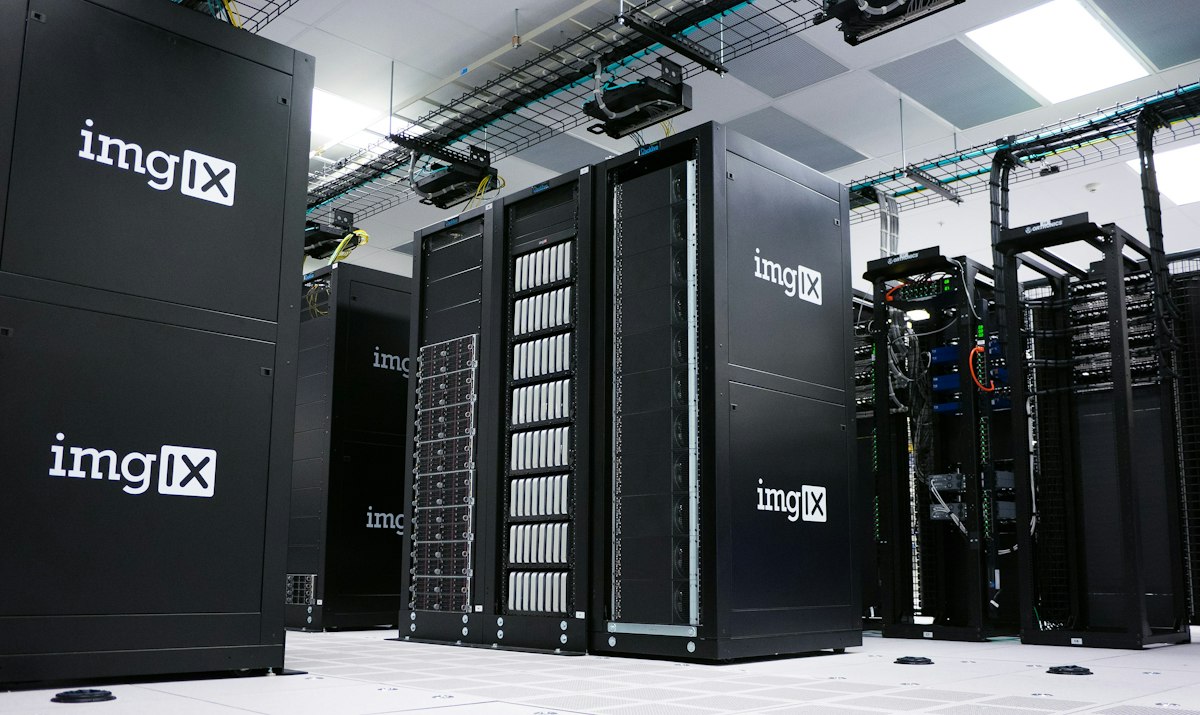
The details come from a talk by David Abitbol, Revolut’s head of AI operations, published by the AI Engineer conference on October 29. According to AI Chat Daily, Revolut runs Z.ai’s GLM models on about 56 Nvidia B200 GPUs, and the self-hosted setup is now the default for coding work. Claude Code and Codex are the exception.
The headline figure is a blended cost of roughly $0.30 per million tokens, about one-tenth of what the company previously paid Anthropic and OpenAI, per the StartupHub account. Before the switch, AI Chat Daily reports, some engineers were spending $1,000 to $10,000 a month on frontier APIs. Revolut did not say whether it owns or rents the cluster.
Two sources disagree on the exact GLM version (one says 4.5, another says 5.1 or 5.3), so treat the model number as unconfirmed. The cost and GPU figures match across all three write-ups I checked.
Speed went up too, not just savings
The cost story is only half of it. AI Chat Daily reports that time to first token fell from over 10 seconds to about 1.6 seconds between April and August, while throughput rose from about 3 to more than 7 requests per second. The GPU count stayed at 56. Abitbol put it this way: “We’ve had 88% improvement in performance for 76% increased demand.”
The gains came from tuning, not new hardware:
- Context capped at 256,000 tokens, since long context was a poor fit for this workload.
- NVFP4 quantization on Blackwell, which reportedly cut the GPU footprint by about 40% compared with FP8.
- Tuned parallelism, plus a cache hit rate above 90% that coding workloads need.
- Latency targets of under 3 seconds to first token and about 200 tokens per second for interactive use, per StartupHub.
Revolut also reports about 60% better coding time and 70% better lead time on its 2,000-engineer sample after the April switch. Abitbol credited the bigger lead-time gain partly to agents taking over non-coding work like inbox triage and meetings once tokens stopped being rationed. In his words, “the bottleneck for engineering is not necessarily coding.” Treat these as self-reported numbers, as FourWeekMBA also notes.
Why the 90% does not transfer to most teams
The $0.30 figure leaves out cloud spend, staffing and observability, as both StartupHub and AI Chat Daily point out. AI Chat Daily cites a third-party estimate of about $2.7 million in hardware for 56 B200s before power and networking, or roughly $245,000 to $327,000 a month if you rent at $6 to $8 per GPU-hour. That works out to about $120 to $165 per engineer per month, which is still far below $1,000, but it is a very different number from 30 cents.
Scale is the other catch. Ecorpit calculates that self-hosting a large GLM model on a single AWS 8-GPU node costs about $35,820 a month and only beats the API above roughly 17.9 billion tokens a month. A 30-developer team would use under 10% of that node. Spheron reaches the same conclusion from a different angle: below its break-even volumes, or with heavy prompt caching, the API usually wins on total cost of ownership.
Quality matters too. On Z.ai’s own benchmarks, reported by Ecorpit, GLM-5.2 scored 62.1 on SWE-bench Pro against 69.2 for Claude Opus 4.8. Those are the vendor’s results in its own harness and have not been independently replicated. Revolut still keeps frontier models for the hard cases, and its self-hosted path is text-only, so image tasks go to Gemini or similar.
Security and compliance are part of the price
Revolut is a bank, and the setup reflects it. Per StartupHub, every agent run is human-in-the-loop inside a sandbox with allow lists, so a command like git add is permitted while broader destructive commands are blocked. Inference stays on GPUs in the US, EU, UK or Israel, with providers that retain no data by default, and OpenTelemetry is used for incident forensics. Prompt injection remains a local data-access risk.
This also shows why the model weights run on Western infrastructure. Ecorpit notes that calling Z.ai’s API sends prompts to servers in China, so self-hosting is the route to jurisdictional control rather than a cost play. Spheron adds that self-hosting means you take on patching, access control and audit logging yourself.
A practical way to test this at your own scale
You do not need 56 GPUs to learn something. A few steps that fit a mid-size engineering team:
- Measure your real token volume per engineer per month, split into input and output, with cache hits counted.
- Price it at current API rates, then at a rented GPU cluster sized for your peak, including the people who will run it.
- Run your own prompts through an open model on a sample of tickets and compare accepted changes, not benchmark scores.
- Keep a frontier model available for the hardest tasks rather than forcing one model on everyone.
- Decide where data may go before you decide where the model runs.
If your volume is in the billions of tokens a month and you have platform engineers to spare, the Revolut path is worth a pilot. If it is not, caching, model routing and budget caps will get you most of the way without owning a GPU cluster.
The takeaway
Revolut’s result is real in the sense that it comes from the team that did the work, but it is a result for a company with 80 million customers, a large engineering org and a compliance team that can dictate how developers use the tool. The useful lesson for everyone else is smaller: stop treating AI coding spend as a fixed line item, and start measuring cost per accepted change. What does your own number look like?